
Second baby preparation: A practical guide for welcoming your new arrival
Key Takeaways
Preparing for a second baby is less about having everything perfect and more about making everyday life manageable for everyone.
- Talk honestly about the emotional changes another baby may bring.
- Reuse what still works and organise practical spaces before the birth.
- Arrange help for delivery, recovery, childcare, meals, and hard days.
- Include your first child without expecting them to feel only excited.
- Give your family time to settle into a new rhythm after the birth.
Start with the emotional and mental preparation
Second baby preparation begins well before the cot is assembled. We are not only getting ready for another newborn; we are also preparing to change the shape of our family, our routines, and our attention. Some days may feel joyful and calm, while others bring worry about coping. Making room for all of that can help us approach the transition with more kindness.
Talk openly about hopes, worries, and expectations
A quiet conversation with our partner can uncover worries we have been carrying around without saying them aloud. We might talk about birth, sleep, money, work, childcare, or how we will divide the day between a baby and an older child. It helps to be specific rather than promising that everything will be easy. We can also discuss what worked last time and what we would prefer to handle differently.
Writing down a few hopes and concerns can make the conversation less tangled. We may not solve every problem in one sitting, but we can agree on which questions need practical answers and which feelings simply need to be heard. Honest conversations build breathing room, especially when neither of us expects the other to have a perfect plan.
Make space for mixed emotions about expanding your family
We can feel grateful for the pregnancy and still miss the ease of life with one child. There may be excitement about watching siblings grow together, alongside sadness that our first child’s babyhood is changing. These feelings do not cancel each other out. They are a normal part of making room for someone new.
Rather than judging ourselves, we can name the emotion and notice what it might be asking for. If we feel overwhelmed, perhaps we need rest, a practical conversation, or time with a trusted person. Keeping expectations gentle is especially useful during a busy pregnancy in regional Victoria, where family and professional support may not always be close by.
Prepare your first child for the changes ahead
Our older child may understand very little about what a new baby will actually mean. We can explain that babies cry, sleep, feed, and need lots of help, while also reassuring them that our love for them is not shrinking. It is worth avoiding promises that the baby will be their instant playmate. A toddler may need repeated, simple explanations over many weeks.
We can also make space for questions that seem unrelated, such as who will do kinder drop-off or where the baby will sleep. These questions often reveal what feels uncertain to them. Listening patiently gives us a chance to offer reassurance without pretending that every day will feel the same.
Set realistic expectations for the transition
With two children, there will probably be moments when one child waits while we help the other. We may serve a very late dinner, change plans, or leave the house with something important still on the bench. That does not mean we are failing. It means we are caring for two people with different needs at once.
A useful expectation is not that everyone stays happy, but that we keep repairing and adjusting. We can lower the standard for spotless rooms and elaborate outings for a while. The goal is a workable family day, not a polished one.
A flexible plan usually serves a growing family better than a perfect one.
When we expect some unpredictability, an interrupted nap or difficult handover feels less like a personal defeat. We can focus on the next small decision rather than trying to control the whole season in advance.
Organize your home for two children
A second baby does not always require a house full of new equipment. Often, the most useful preparation is clearing space, checking what remains safe and practical, and placing everyday items where we can reach them. We can set up for real life rather than an ideal nursery photograph. A few simple changes may make feeding, nappy changes, and toddler care easier on tired days.
Decide what baby gear you can reuse
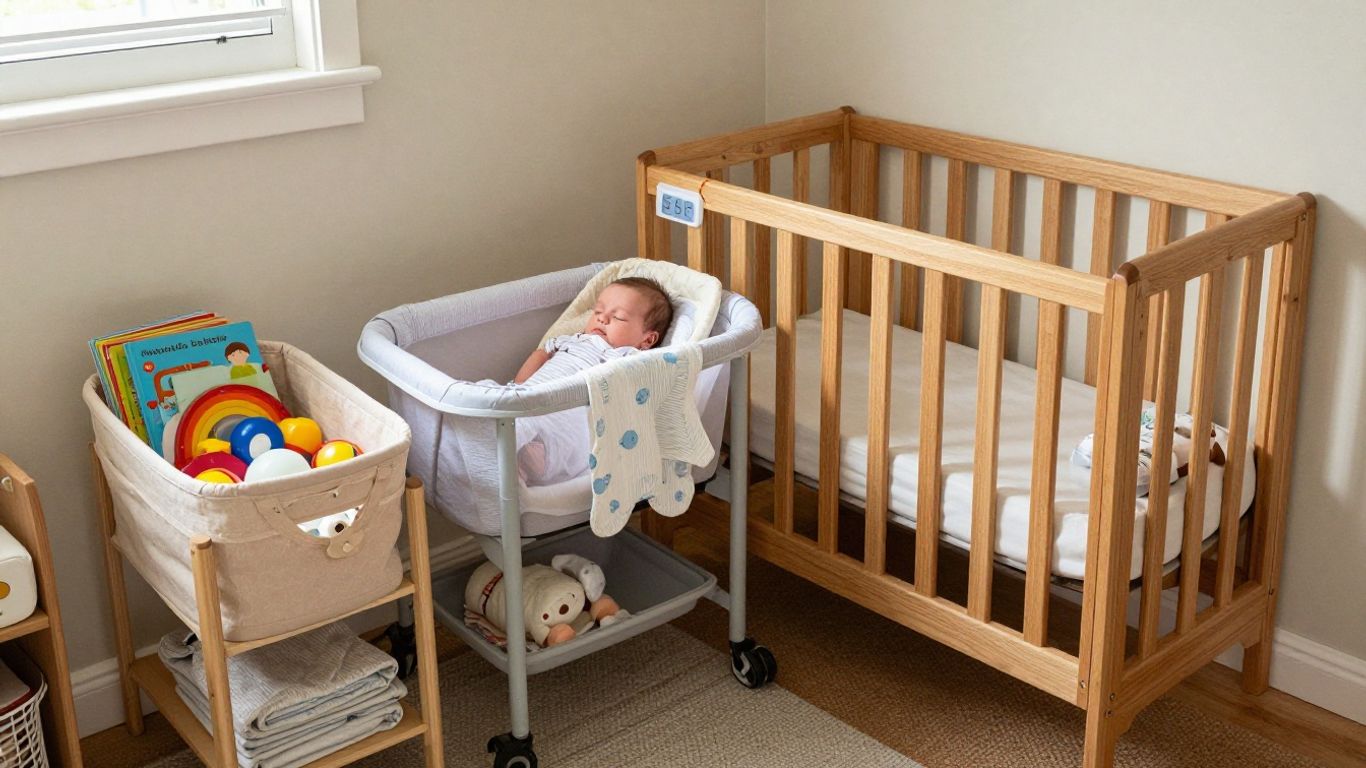
We can sort existing baby items into three groups: ready to use, needing a clean or repair, and no longer suitable. Check that anything we reuse is in good condition and appropriate for the baby’s age and use. Some items may have been outgrown, recalled, damaged, or stored somewhere inconvenient.
It is also fine not to reuse everything simply because we already own it. We can keep what genuinely helped last time and leave the rest behind. Borrowing or buying less at the beginning may be sensible when we are not yet sure what this baby will use.
Create practical sleeping and changing spaces
The changing area does not need to be elaborate, but it should be stocked and easy to reach. We can keep nappies, wipes, clean clothes, and a safe place for supplies together, while making sure older children cannot access anything unsafe. A small basket in the rooms we use most may be more useful than one beautifully arranged station.
Sleeping arrangements deserve a calm review too. We can think through where the baby will sleep, how we will move around at night, and what our older child may need during those wake-ups. The best setup is usually the one that reduces unnecessary trips and keeps essential care close at hand.
Stock up on everyday postpartum essentials
Before the birth, we can gather ordinary things that make recovery and family life less fiddly. This is not about buying every product recommended online. It is about noticing what we reached for constantly last time and putting those basics somewhere visible.
A short household list might include:
- Easy meals or ingredients for quick meals.
- Comfortable clothing and extra laundry supplies.
- Nappies and everyday baby-care items.
- Drinks and snacks for long feeding or settling periods.
These supplies are not a substitute for help, but they can remove a few decisions when we are tired. We can ask someone else to check the list, collect groceries, or prepare a meal rather than trying to do every job ourselves.
Make room for toddler and newborn routines
Our older child still needs familiar anchors, even if the day becomes less predictable. We can keep a few steady points, such as breakfast, kinder preparation, bath time, or a short story before bed. The routine does not need to run at exactly the same time to feel reassuring.
It may help to prepare a small basket of quiet activities for feeds or settling. We can rotate books, puzzles, drawing materials, or a favourite audio story, depending on our child’s age. The aim is not to keep them occupied all day, but to make short periods of waiting more manageable.
Plan for pregnancy, birth, and postpartum recovery
Our first birth gives us useful experience, but it does not tell us exactly how the next one will unfold. We can use what we remember without assuming the same needs or feelings will return. A practical plan should cover transport, care for our older child, household support, and our own recovery. It should also leave room for changes.
Review what you learned from your first birth
We can think back over the first birth and the weeks that followed. What helped us feel calm? Which arrangements created stress? Were there supplies, conversations, or boundaries we wished we had organised earlier? These reflections are more useful when they focus on our experience rather than on what we think we should have managed.
We can write a short list to discuss with our care team, without treating it as a guarantee about the next birth. Medical questions and individual concerns should be raised with the appropriate health professional. Our job at home is to remember what matters to us and communicate it clearly.
Arrange help for delivery day and the early weeks
We should decide who can care for our first child if labour begins unexpectedly, including overnight or during a busy weekday. A primary plan and a backup plan are helpful, especially when relatives live a long drive away. We can confirm contact details, transport, keys, pets, meals, and any kinder arrangements before the final weeks.
It is also worth asking people about specific availability rather than making a vague request for help. Someone may be able to do school drop-off, cook, or sit with our older child even if they cannot stay overnight. Clear requests make it easier for others to say yes to something realistic.
Prepare for recovery while caring for an older child
Recovery can be demanding even when we already know how to care for a newborn. We may still need rest, food, quiet, and practical assistance while our older child wants attention and activity. We can identify low-effort ways to connect, such as reading beside them, cuddling during a feed, or listening to their story while lying down.
If movement, pain, mood, or recovery feels concerning, we should contact a qualified health professional. We do not need to prove we can push through. Organising help with lifting, meals, laundry, and outings can protect the energy we need for both children.
Build a flexible postpartum plan
A written plan can cover the basics without pretending we know exactly what each day will bring. We can include who handles meals, who takes our older child to kinder, and which tasks can wait. It may also help to agree on how we will communicate when one of us is running low.
The plan should be easy to change. If a baby feeds differently, an older child becomes unsettled, or a helper cancels, we can return to the essentials: safe care, food, rest where possible, and a calm next step. Flexibility is part of preparation, not evidence that preparation failed.
Prepare your first child for a new sibling
Our first child is not a small adult who needs to understand every detail. They need simple information, repeated reassurance, and chances to stay connected with us. Their response may shift from excitement to anger and back again. We can support the relationship without making them responsible for our feelings or the baby’s care.
Explain the baby’s arrival in age-appropriate ways
We can use familiar words and concrete details. A baby will come home, make noises, need help with feeding and changing, and spend lots of time sleeping. For a toddler, we may need to repeat these ideas often and connect them to what they can see, such as the growing belly or the baby’s clothes.
We can explain what will change and what will stay the same. For example, a parent may be away for the birth, but familiar people will care for them and we will return. Clear information can be more reassuring than a long explanation filled with details they cannot yet understand.
Involve your child in simple preparations
Our older child might choose between two baby outfits, help place a book near the cot, or draw a picture for the baby. Small jobs can give them a place in the preparation without making them responsible for getting everything ready. We should follow their interest rather than pushing them to perform excitement.
We can also prepare them for the less glamorous parts of newborn life. They may hear crying, see us change nappies, or need to wait while we settle the baby. Practising a gentle touch and a simple way to ask for attention can be more useful than talking only about being a big sibling.
Plan how to handle the first introduction
The first meeting does not need to be staged perfectly. We can think about where it will happen, who will hold the baby, and how our older child might be greeted. If possible, greeting them warmly before focusing on the newborn may help them feel seen.
We can keep the visit short and responsive. Some children will want to look closely, while others may ignore the baby and investigate the room. Both reactions are fine. We can offer a cuddle, a familiar activity, or a quiet moment rather than insisting on a particular emotional response.
Protect one-on-one time after the birth
Even brief pockets of attention can reassure our first child that they still matter. We might read one book, share a snack, sit together before bedtime, or take a short walk when another adult is available. The activity does not need to be expensive or impressive; consistency often matters more.
We can also name the connection while we are busy. Saying that we are looking forward to hearing their kinder story, or that we noticed how carefully they waited, helps them feel remembered. One-on-one time will not prevent every difficult feeling, but it gives those feelings a safer place to land.
Strengthen your daily routines and support system
Two children make the invisible work of family life more noticeable. Meals, laundry, appointments, kinder bags, naps, and bedtime all compete for attention. We can make the load easier by deciding what matters most, sharing jobs clearly, and building support before we urgently need it. This is especially helpful when our usual village is spread across regional Victoria.
Practice routines that will work with two children
We can trial parts of the future routine before the baby arrives. Perhaps our partner takes over the morning kinder preparation, or we practise getting everyone out the door with a slower, simpler sequence. Small experiments show us where we are relying on one person to do too much.
We do not need to copy the newborn’s schedule in advance. Instead, we can practise flexible habits such as packing bags the night before, keeping breakfast simple, and preparing clothes in one place. These changes reduce the number of choices waiting for us at dawn.
Coordinate childcare, meals, and household responsibilities
A conversation about responsibilities should include the jobs that are easy to overlook. Who books appointments? Who notices that nappies are nearly gone? Who arranges a kinder form or replies to a message from family? Naming the work helps us share it rather than waiting for one person to become overwhelmed.
We can write down a straightforward division of tasks for the first few weeks:
- Morning and afternoon kinder or childcare responsibilities.
- Grocery shopping, cooking, and collecting meals.
- Laundry, dishes, and essential household cleaning.
- Newborn settling, feeds, and overnight support where possible.
The list is a starting point, not a contract. We can review it when the baby arrives and adjust for recovery, work, sleep, and the needs of each child.
Ask family and friends for specific kinds of help
People often say, “Let us know if you need anything,” and genuinely mean it. We can make that offer easier to act on by naming one job. A friend might drop off dinner, a grandparent might take our older child to the park, or a neighbour might collect groceries on their way past.
We can also be honest about the kind of help we do not need. Visits that create more hosting work may not suit us in the early weeks. Practical support can be quiet and ordinary, and we are allowed to ask for it.
Identify backup support for difficult days
Our first plan may fall through because someone is unwell, work changes, or the baby arrives earlier than expected. We can keep a short list of alternative contacts and services that may be available in our area. It is worth checking arrangements before the birth rather than searching while exhausted.
We should include support for emotional strain, not only transport and meals. If either of us feels persistently low, anxious, unable to cope, or worried about safety, we can contact a qualified health professional or an appropriate support service promptly. Asking early is a practical step, not a failure.
Prepare financially and practically for baby number two
A second child can change household costs in ways that are easy to underestimate. Some expenses can be reused, while others arrive regularly through childcare, transport, clothing, and daily supplies. We can review our arrangements in plain language and separate known costs from guesses. This is general planning information, not personal financial advice.
Review childcare and work arrangements
We can check how our older child’s kinder or childcare days fit with the new baby’s appointments and our work commitments. If leave, flexible hours, or a change in care is possible, we should find out what the arrangement involves and when decisions need to be made. Written details are useful when conversations become confusing.
It may also help to consider the practical distance between home, care, work, and health appointments. A plan that looks manageable on paper may be tiring if it involves several long drives. We can look for the simplest routine that suits our family rather than copying someone else’s setup.
Update your family budget and recurring expenses
We can list current regular costs, then add likely changes such as nappies, extra childcare, transport, and household supplies. Some spending may decrease for a while, while other costs become more frequent. A clear list gives us something concrete to review together.
We can also decide which purchases are genuinely needed before the birth and which can wait. Avoiding a rushed shopping spree leaves more room to respond to what our family actually uses. If money feels tight, we can seek qualified, independent help rather than relying on guesses or pressure.
Check insurance, parental leave, and important paperwork
Before the baby arrives, we can gather the documents and contact details we may need. This might include leave information, childcare records, health paperwork, and details held by our insurer or employer. We should read the relevant terms carefully because cover, eligibility, waiting periods, and leave conditions depend on the specific policy or arrangement.
A simple folder, digital or physical, can keep confirmations and questions together. We do not need to understand every piece of jargon immediately. Writing down what we do not understand gives us a clear list to ask about.
Plan transportation and appointments for two children
Appointments are easier when we have considered travel, parking, bags, feeding, and supervision for our older child. We can keep a small outing kit ready and check whether another adult can come along when needed. For regional families, travel time can make a short appointment take up much of the day.
We can also keep calendars aligned so that kinder events, work commitments, and health appointments do not collide unnecessarily. A shared calendar or paper planner may be enough. The best system is the one we will actually look at when we are tired.
Expect the adjustment period after the birth
The first weeks with two children may feel tender, noisy, repetitive, and strangely ordinary all at once. We may be proud of getting through the morning and upset by lunchtime. Our older child may test limits, seek more help, or seem suddenly younger. These changes do not mean the family is going backwards; they are part of adjusting to a major shift.
Balance newborn care with your older child’s needs
Newborn care often arrives with urgency, while an older child’s needs can be quieter but just as real. We can explain when the baby needs us and offer our first child a clear next point of connection: “I’ll finish this nappy, then we’ll read together.” Following through when possible helps them trust what we say.
We can also keep a few age-appropriate activities within reach for waiting times. Our older child does not need to be endlessly independent, though. They may need help with shoes, food, affection, or simply being close to us.
Manage sleep changes and divided attention
Sleep may change for everyone, and our older child may wake more often or resist bedtime. We can keep the evening predictable where possible, even if it is shorter than before. Sharing overnight tasks and accepting help with mornings may protect a little energy.
Divided attention can feel uncomfortable. We will not respond instantly to every request, and neither child will receive our full focus all day. What matters is returning to connection when we can and avoiding the belief that one imperfect moment defines our parenting.
Watch for signs that you need more support
We can check in with ourselves and each other rather than waiting until everything feels impossible. Ongoing distress, frightening thoughts, extreme anxiety, hopelessness, or difficulty caring for ourselves or the children deserves prompt attention from a qualified health professional. We can also ask someone trusted to stay nearby while we make that contact.
Support may need to be practical, emotional, or both. A meal and a nap may help one day, while another day calls for a longer conversation or professional care. Noticing the difference is part of looking after the whole family.
Give your family time to find its new rhythm
There is no single week when everything should suddenly feel easy. We may find a routine, lose it during illness or a growth change, and build another one later. Our children will continue to develop at different speeds, so the balance will keep moving.
We can mark small signs of progress: leaving the house with both children, sharing a calm story, or making it through bedtime with fewer surprises. The new rhythm may not resemble the old one, and it does not have to. With patience, practical support, and plenty of ordinary repetition, our family can grow into its new shape.
Frequently Asked Questions
When should we start preparing for a second baby?
We can begin whenever preparation feels useful, but starting with conversations and a simple review of support can make the process calmer. There is no need to complete every task early; focus first on arrangements that depend on other people, such as childcare and transport.
What baby items can we reuse?
We can reuse items that are clean, intact, suitable for the baby’s age and use, and still practical for our household. Check each item rather than assuming everything stored away is ready, and replace anything damaged or unsuitable.
How can we help our first child adjust to a new sibling?
Use simple explanations, involve them in small preparations, and protect regular one-on-one moments. We can acknowledge difficult feelings without expecting constant excitement or making the older child responsible for caring for the baby.
What should we arrange for the birth?
We should organise a primary and backup plan for who will care for our older child, how everyone will travel, and who can help during the early weeks. It is also useful to confirm practical details such as keys, meals, pets, and childcare contacts.
How can we manage routines with a newborn and a toddler?
Keep a few familiar anchors, such as meals, kinder preparation, or bedtime, while allowing the timing to change. Preparing bags in advance and simplifying meals can reduce pressure without requiring a rigid schedule.
Is it normal to feel worried about having another child?
Yes. Excitement, sadness, guilt, nervousness, and confidence can all appear during the same period. Talking with a trusted person and seeking qualified support when worry becomes persistent or overwhelming can help.
How long does it take to adjust to two children?
Adjustment varies between families and can happen in stages rather than all at once. We can expect routines and emotions to keep changing while everyone learns the new pattern, and we can seek more support whenever coping becomes difficult.